Ages 7-9

Silver Maples

All about our Silver Maples pod

The Silver Maple years are a time of branching outward while rooting deeper — of gathering wisdom, practicing discernment, and standing steady in community. They are learning not only skills, but stewardship; not only knowledge, but character. In many ways, they begin to understand that they are becoming the strong canopy under which others will one day grow.

In our Silver Maple program (ages 9–11), expectations rise in step with developmental readiness. This is a season of strengthening — intellectually, socially, and morally. Like the silver maple itself — deeply rooted, wide-reaching, adaptable, and resilient — these students are growing into steadiness and wisdom. They are no longer simply learning how a community functions; they are becoming essential pillars within it.

Academically, rigor increases alongside independence. Students engage in deeper project-based work that integrates research, writing, data collection, analysis, and presentation. They are expected to sustain focus for longer periods, manage multi-step tasks, and track progress toward longer-term goals.

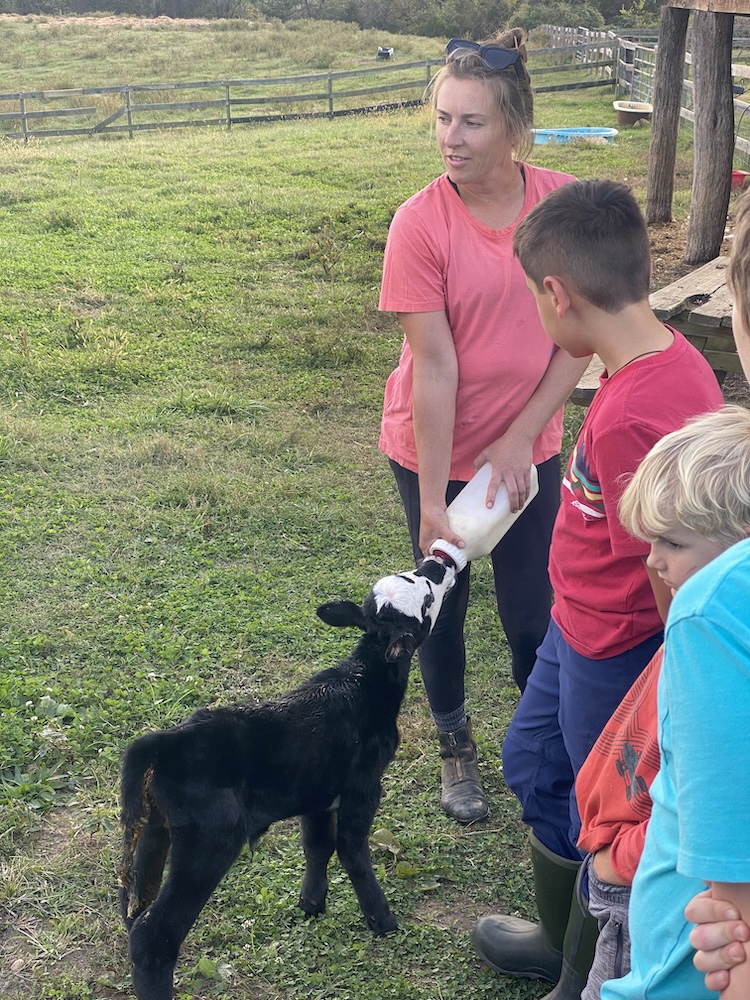
Within the homestead context, Silver Maples play a vital leadership role. They mentor younger groups during farm tasks, model responsibility, and help uphold community rhythms. In product development and fundraiser efforts, they may assist with planning, quality control, inventory tracking, marketing ideas, and event coordination. They experience firsthand how thoughtful effort supports the sustainability of the whole.

Nine- to eleven-year-olds long to be taken seriously. They seek fairness, competence, and meaningful contribution. They are developing the cognitive capacity for systems thinking and the emotional capacity for principled leadership. When entrusted with real responsibility and higher expectations, they rise with remarkable strength.
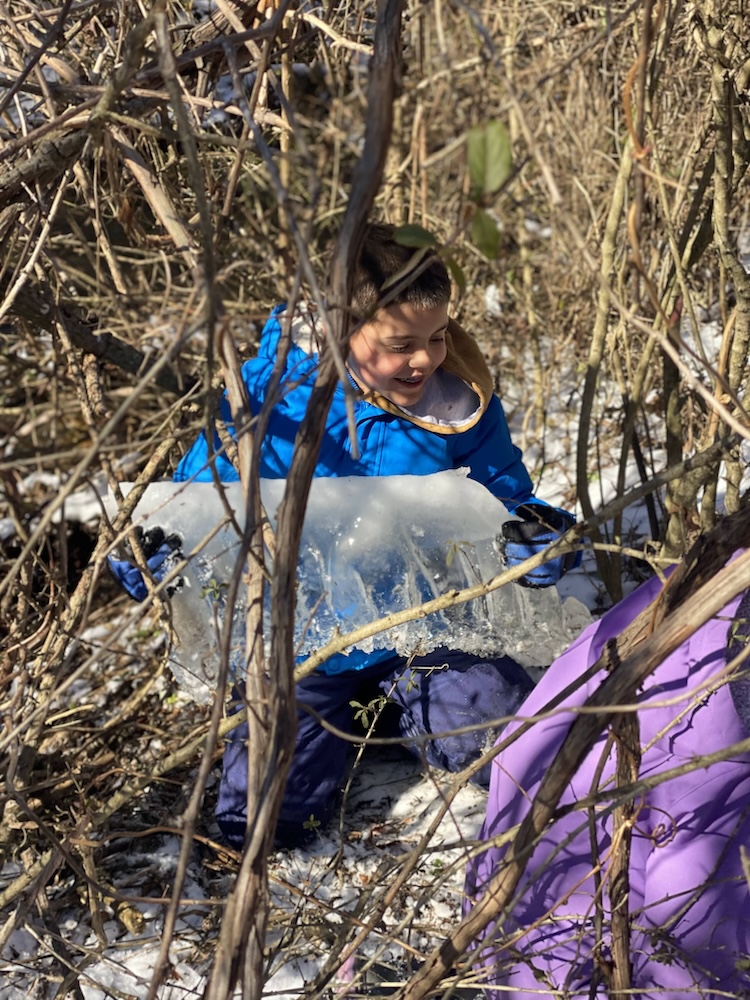
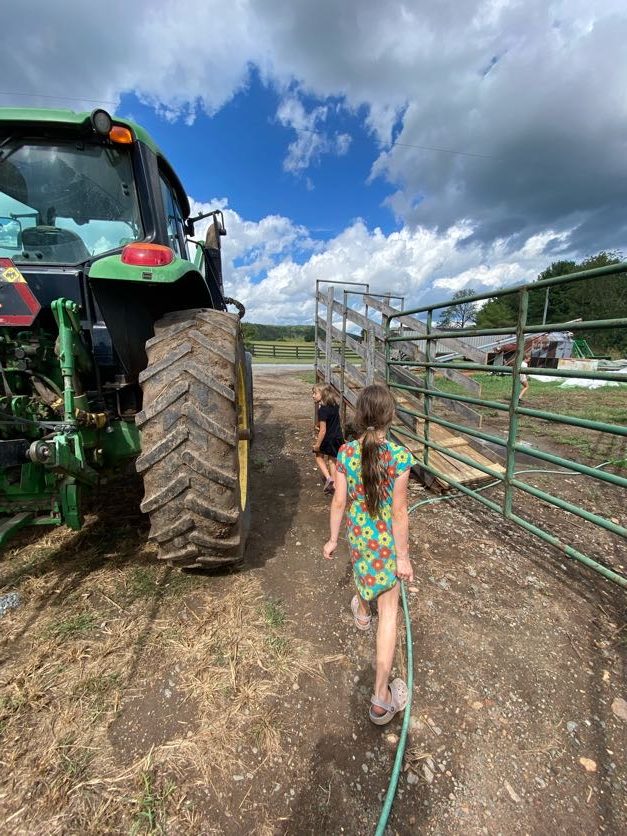
Silver Maples Curriculum

  • Social and emotional growth moves toward self-awareness, integrity, and leadership. Silver Maples are expected to practice thoughtful communication, take responsibility for their impact on the group, and actively contribute to a culture of respect. Conflict resolution becomes increasingly student-led, with teachers serving more as mentors than mediators. We challenge them to reflect, repair, and respond with maturity. At this age, children are capable of nuanced empathy and moral reasoning — and we make space for meaningful dialogue, ethical discussion, and collaborative decision-making.
  • Cultural and social studies broaden into the study of civilizations, trade systems, agricultural history, and governance structures. Within our cooperative model, students examine how communities organize labor, share resources, and sustain economies. Current events are discussed with increasing critical thinking, helping students connect local stewardship to global systems.
  • Math expands into applied problem-solving, fractions and decimals, ratios, introductory pre-algebraic thinking, budgeting, and real-world financial literacy. Within the homestead context, this may include calculating yield projections, managing supply costs, tracking fundraiser profits, analyzing growth data, or designing scale drawings for garden or building projects. Math becomes a language for stewardship and enterprise.
  • Language Arts moves into structured writing, revision, and public presentation. Silver Maples craft research reports, persuasive pieces, reflective essays, and creative narratives. They practice note-taking, outlining, editing, and peer feedback. Vocabulary deepens through exposure to scientific, agricultural, architectural, and historical terminology connected to our work. Reading comprehension includes analyzing themes, character motivation, and author’s purpose, as well as engaging with nonfiction texts connected to ecology, food systems, and history.
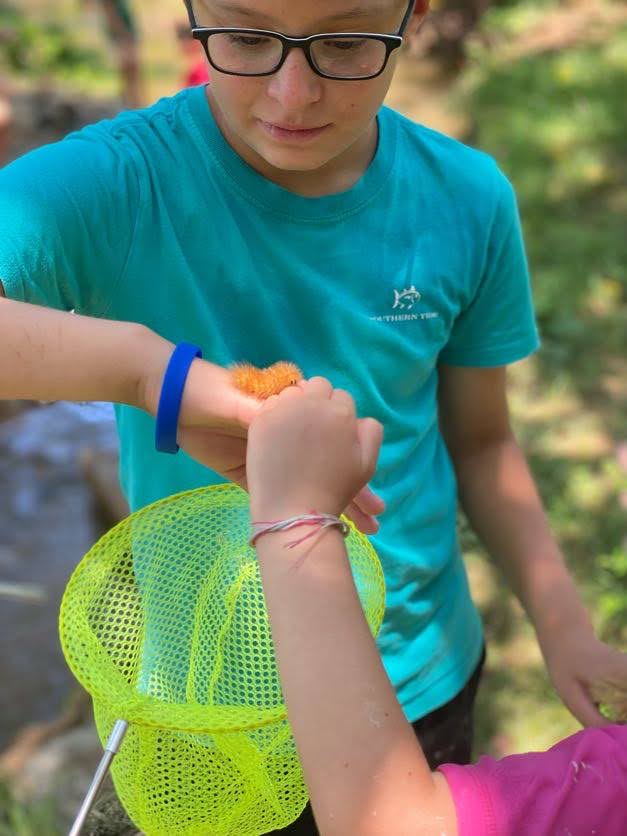
  • Science shifts from observation and guided experimentation to inquiry-driven investigation. Students design simple experiments, test hypotheses, document findings, and evaluate results. Studies may include soil chemistry, watershed systems, plant reproduction, animal biology, weather mapping, compost microbiology, or sustainable agriculture practices. They begin to understand not only what happens in nature, but why.
  • Creatively, Silver Maples are challenged to refine craftsmanship and conceptual thinking. Woodworking projects require precision and planning. Architectural studies may include scaled models and structural analysis. Fine art studies emphasize technique, art history context, and artistic voice. They are invited to move from spontaneous creativity into intentional design.
Become A Donor

Contact Info

Contact our Office

5455 Jones Mill Road
Crozet, VA 22932

(540) 699-0251
th***********@***il.com

Mon – Fri 9:00A.M. – 5:00P.M.

Social Info